
Thanatos (Θάνατος) the Greek personification of Death is the god responsible for guiding the dead to the underworld. His genealogy is explained for the first time in the poem Theogonía by Hesiod, who says that He is the son of Nyx (goddess of the Night) and Erebos (god of the Darkness). The poet also describes his twin brother Hypnos who personifies the Sleep.
His obscure nature gave him very negative attributes and to emphasize that idea, it was given to him more gloomy siblings such as “Suffering”, “Doom”, “Retribution”, “Deception”, “Blame”, “Strife” or “Old-age”. This dark atmosphere that surrounds him tends to get worse throughout time, especially during the Middle Ages. Among some other moralistic concepts of Hell or Sin, Death was used as a tool to inflict the most apolitical fear on people, in order to manipulate them effortlessly.
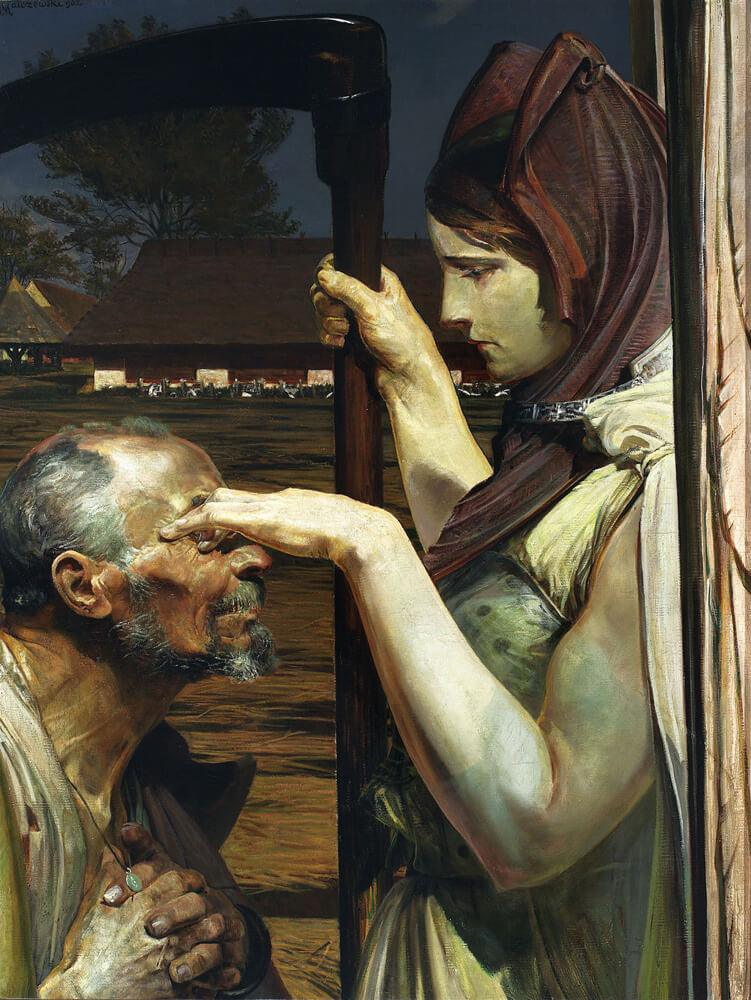
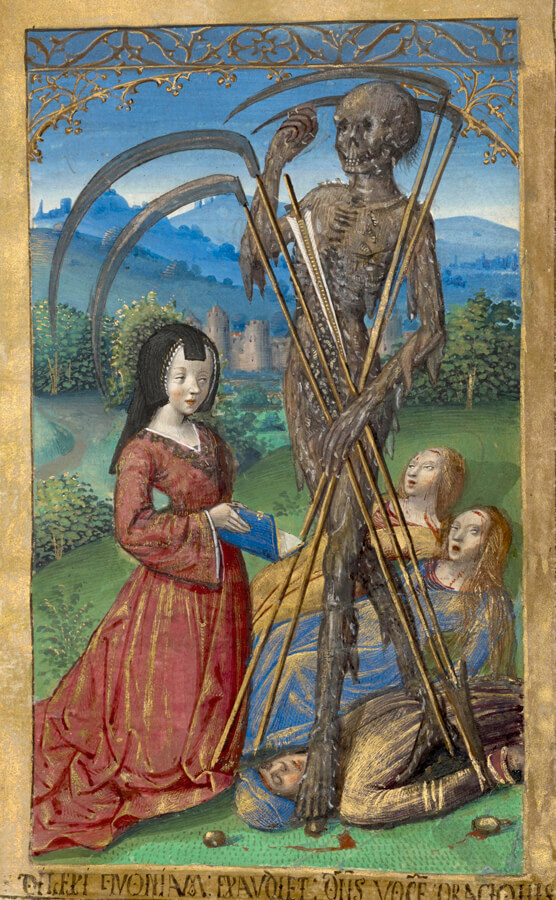
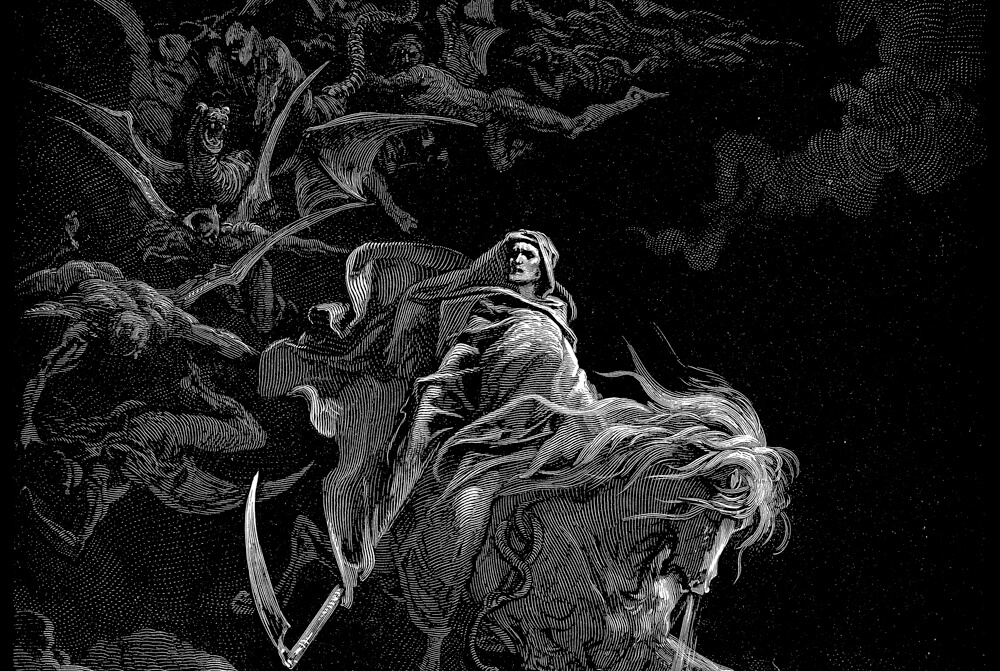
In the original personifications, Thanatos appears as a winged young man; the figure evolved to his most popular aspect during the 14th century in Europe. At this time, when the world faced its worst pandemic, he became to be known as “The Grim Reaper”.
The ancient angelic figure rots and turned into a skeletal figure, the symbol of human decaying; the black robe is commonly associated with religious funerary outfits of that epoch, while the famous scythe (symbol of Saturn and Time in classical times) is said to be inspired by the agricultural practices and harvesters – with this tool the figure assumes the job of a reaper (of souls).
Through the Dark Ages, the reputation of the personified Death grew beyond measure and we still “celebrate” the same image in the current times.

Our interpretation wants to confront all the previous depictions, just like the neoclassical and romantic artists/poets from the 18th-19th century, by merging both classical and medieval references to the figure. During the Neoclassic and Romanticism periods, the artists brought back the original image of Thanatos in a more poetic way – that eased a little his darkest and negative features.
Unlike the traditional portraits, we decided to cut off his wings and move him away from the idea of a dark angel and turn him into a phantasmal apparition who comes to us as a divine revelation – He kind of looks like the Nazgûl, the black rider from the Lord of the Rings.
His cadaverous chest is filled with dry roots and branches and, just like the wooden structure behind him, refers to the carnal world and the end of a physical cycle.
The static posture resembles a religious icon, just like the Virgin Mary or even more like the Santa Muerte.
Under the hood, we usually find a skull or a human face but we prefer to have him unrecognized to reflect the unknown aspects of our minds; our fears and doubts.
In general, the design looks like an altar and it has a very ritualist tone, emphasized by the ceremonial daggers, the side skulls, and the blood bowl at the center.
We also had some inspiration from some cults to Thanatos – You can easily find interesting Orphic Hymns dedicated to him and more contemporary prayers to end the suffering of the dying or to a painless end, sometimes described as “good dead”.
The circle behind his head is straightly connected to the cycles and how our lives are made of them. Symbolically, death represents the end of a cycle and a new beginning just like the Death in the Tarot – The sun sets and dies every day to rise with huge splendor in the very next morning.
 No products in the cart.